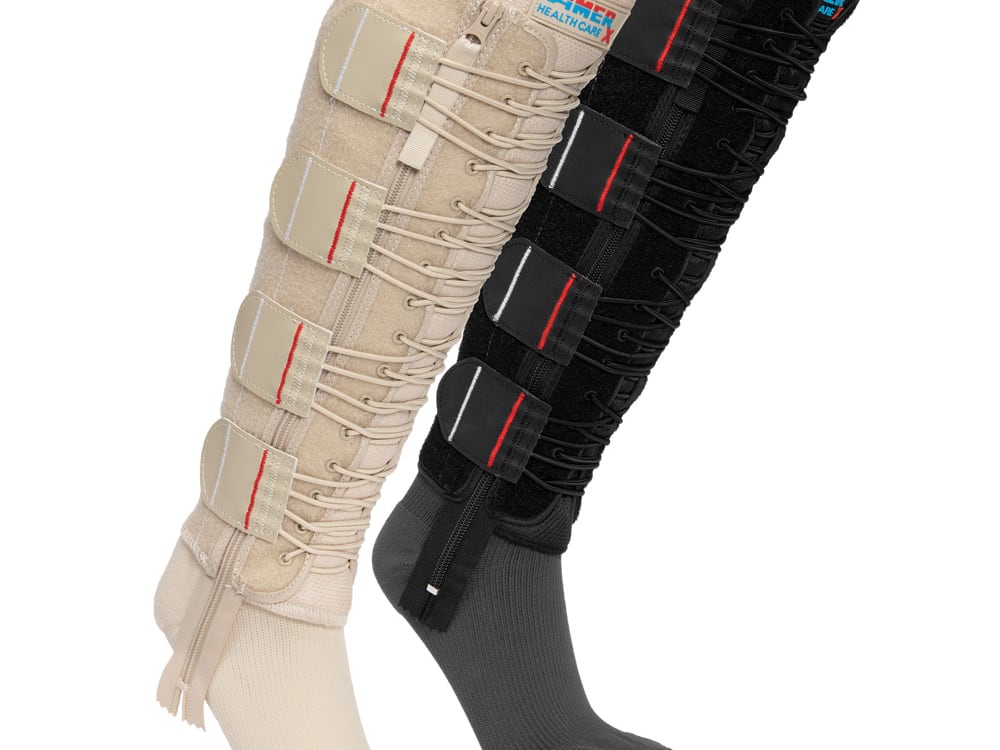
If you've been diagnosed with lymphedema, compression garments are one of the most effective tools for keeping swelling under control and staying comfortable and mobile. But the options — different styles, compression levels, and fits — can feel overwhelming. This guide breaks down the essentials.
What is lymphedema?
Lymphedema is ongoing swelling, usually in an arm or leg, that happens when the lymphatic system can't drain fluid the way it should. It's common after certain cancer treatments, surgery, or injury, and it tends to be a long-term condition that's managed rather than cured. Consistent compression is a cornerstone of that management.
How compression therapy works
Compression garments apply gentle, graduated pressure — firmest at the far end of the limb (like the ankle or wrist) and lighter as they move up. That gradient encourages fluid to move out of the limb and back toward the body, which helps reduce swelling, ease heaviness, and support healthy circulation throughout the day.
Choosing the right compression level
Compression is measured in millimeters of mercury (mmHg). Higher numbers mean firmer compression. Your prescriber will recommend a level based on your diagnosis and how your body responds — this isn't a guess-and-buy decision, and the right level matters for both results and comfort. A proper fitting is just as important: a garment that's too loose won't help, and one that's too tight can be uncomfortable or counterproductive.
Common types of garments
- Arm sleeves and gauntlets for upper-limb lymphedema.
- Knee-high, thigh-high, and full-leg garments for lower-limb swelling.
- Wraps and adjustable systems that use hook-and-loop straps for an easy, customizable fit — helpful for limited hand strength or fluctuating swelling.
Caring for your garments
Compression garments lose elasticity over time, so most people need replacements on a regular schedule (often every few months) to keep them working. Hand-wash or use a gentle cycle, avoid high heat, and rotate between two garments so each can rest and recover its stretch.
Getting compression garments through insurance
Compression garments are frequently covered for people diagnosed with lymphedema and certain venous conditions, when prescribed. Coverage rules and replacement frequency vary by plan. Quantum Medical verifies your benefits, coordinates documentation with your doctor, fits you correctly, and reminds you when you're due for fresh garments — see our compression garments page for details.